This is a pattern we see more often than you'd expect. A direct-to-consumer apparel brand — activewear, in this case — processes a few hundred orders a week. Revenue is healthy. Growth is steady. Then someone on the team starts pulling the dispute reports and notices a trend that doesn't look like fraud.
The chargebacks aren't coming from stolen cards. There are no velocity spikes from suspicious IP addresses. No bulk orders to forwarding addresses. The disputes are from real customers, buying one or two items at a time, at full price, with their own cards, shipped to their own homes.
They receive the product. They wear it. Then they file a dispute with their bank.
Why apparel is uniquely exposed
Friendly fraud — where the actual cardholder disputes a legitimate purchase — is the dominant type of chargeback in e-commerce. Industry data puts it at roughly 75% of all disputes. But apparel merchants face a specific version of this that's harder to fight and more expensive to absorb.
Here's why: when a customer disputes a charge on a pair of leggings they've already worn, the product can't be resold. It's gone. Unlike electronics, which can be refurbished, or digital goods, which have no physical fulfillment cost, clothing that's been worn and returned through a dispute is a total write-off. The merchant loses the product, the shipping cost, the chargeback fee, and whatever margin was built into the sale. There's no recovery path.
The fitness brand in this case was averaging 40–50 disputes a month. Their average order value was around $65. The chargebacks themselves cost roughly $65 × 45 = $2,925 in lost transaction revenue per month, before adding chargeback fees ($20–$35 each), shipping ($6–$8), and the labor to manage representment. All-in, the monthly cost was consistently clearing $3,000 and sometimes running closer to $4,000.
And they were winning almost none of their representment cases. Because the product was delivered. The customer did receive it. The bank's perspective is: the cardholder says they didn't authorize the charge, or the product wasn't as described, or they already returned it. Without a signed return receipt or video evidence of product condition at delivery, the merchant loses.
The pattern underneath the pattern
When the brand started looking more closely, a few things became clear.
First, the disputes were disproportionately concentrated in two product categories: leggings and sports bras. These are the items most likely to be worn once or twice and then disputed — they're easy to use without tags, hard to prove as "used," and the customer knows the brand can't resell them.
Second, a meaningful portion of the disputing customers were repeat buyers. They had purchased before without incident. The chargebacks started on their second or third order — suggesting that the behavior was learned, not accidental. Someone discovers that disputing a charge is faster and easier than going through a return process, and it becomes a habit.
Third, the disputes were spread across card types and issuers. This wasn't a vulnerability in one bank's dispute system. It was a consumer behavior pattern that exploited the fact that most banks side with the cardholder by default in disputes under $100.
What actually worked
The brand tried the standard playbook first. They added more detailed product descriptions to reduce "not as described" disputes. They made their return policy easier to find. They shortened the return window to discourage post-wear disputes. They added clearer transaction descriptors so customers would recognize the charge on their statement.
Some of that helped marginally. Clearer descriptors reduced the "I don't recognize this charge" disputes by a small amount. But the core problem — customers intentionally disputing legitimate purchases — wasn't a clarity issue. It was an incentive issue.
What actually moved the number was a combination of three things:
Pre-transaction screening on repeat disputors. When a customer has filed a dispute in the past, that information is available through shared fraud networks. The brand started flagging known disputors at checkout and routing their transactions through additional verification. This doesn't block the customer outright — it adds 3D Secure authentication, which shifts liability to the issuing bank if a dispute is filed later.
Delivery confirmation with photo proof. They switched to a carrier that provides GPS-stamped photo evidence of delivery. This gave their representment team significantly stronger evidence packages. Their win rate on disputed transactions with photo proof went from under 20% to above 50%.
Proactive refund outreach. When their system flagged a transaction as high-risk for a post-delivery dispute (based on customer history, product category, and order pattern), they sent a proactive email within 48 hours of delivery: "How did everything fit? If anything isn't right, here's how to return it." Customers who might have gone straight to their bank to dispute were given a frictionless alternative. This reduced chargebacks in the flagged segment by roughly 30%.
None of these are exotic solutions. They're standard tools combined in a way that addresses the specific dynamics of apparel fraud. But the key insight is that the brand had to stop treating chargebacks as a payment processing problem and start treating them as a customer behavior problem.
The numbers after six months
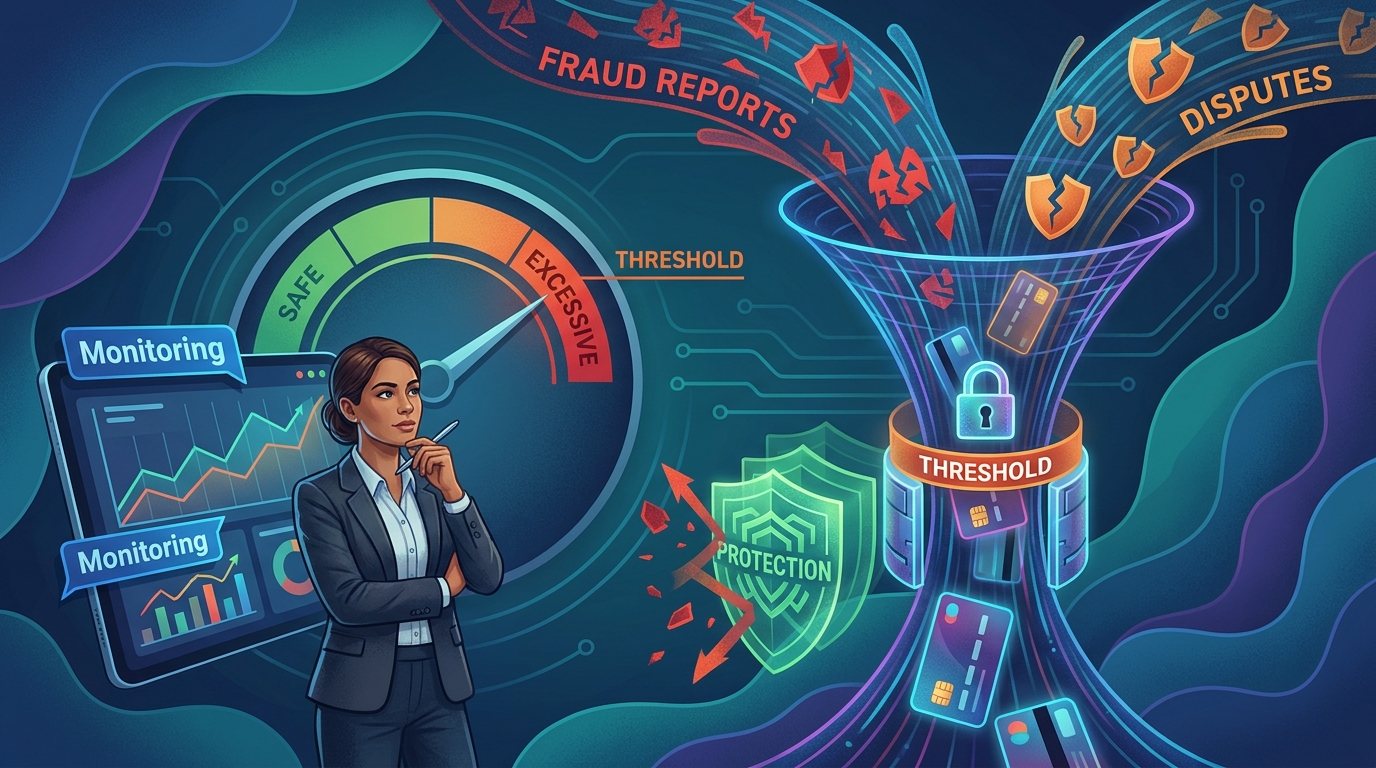
Six months after implementing these changes, the brand's monthly chargeback volume dropped from 40–50 disputes to 15–20. Their dispute ratio went from 1.3% to 0.6% — comfortably below Visa's new 1.5% VAMP threshold. Their all-in monthly dispute costs dropped from $3,000–$4,000 to around $1,200.
That's roughly $20,000–$30,000 in annual savings. For a DTC brand doing $400K–$500K/year in revenue, that's a meaningful number.
And there's a secondary benefit that's harder to quantify: they stopped over-declining. Before implementing targeted screening, they had been blocking suspicious-looking orders manually — and some of those orders were legitimate. By moving to a data-driven screening approach, they reduced false declines and recovered revenue from customers they would have turned away.
What this means for other apparel merchants
If you sell physical goods that can't be resold after use — clothing, cosmetics, perishable items — you're operating in the category most exposed to friendly fraud. The customer has every reason to file a dispute and very little reason not to. The product is consumed. The return process feels like effort. The bank makes it easy.
The standard response is to fight each chargeback individually through representment. That's expensive and slow, and for low-value apparel transactions, the math usually doesn't support it.
The better approach is to make the chargeback harder to file (through authentication that shifts liability), easier to detect (through shared fraud data), and less attractive to the customer (through proactive service that gives them a simpler path than calling their bank).
The chargebacks are coming from real people. The solution has to account for that.