TL;DR / Key Takeaways
- The average blended credit card processing fee lands around 2.35% per transaction, with a real range of 1.10% to 3.15% depending on card type and channel.
- E-commerce merchants typically see effective rates of 3.2% to 3.8%, well above the advertised 2.9%.
- Visa and Mastercard run cheaper than American Express, which consistently charges the highest interchange rates.
- Hidden costs (chargebacks, gateway fees, cross-border surcharges) can add 0.9 to 2.7 percentage points on top of headline rates.
- Interchange-plus pricing saves most merchants 50 to 80 basis points versus flat-rate models once monthly volume exceeds $15K to $20K.
Credit Card Processing Fees Are Costing More Than You Think
If you accept card payments, you already know fees eat into your margins. But most merchants underestimate how much. The advertised rate from your processor might say 2.9% plus $0.30, but once interchange, network assessments, gateway charges, and chargeback costs are layered in, the real number usually lands closer to 3.5% to 4%.
Industry data shows credit card processing fees hit a record $198.25 billion in 2025, and rates have only continued climbing into 2026. For a business processing $500,000 a year, a one-percentage-point difference in effective rate means $5,000 in extra costs. That is real money, and it is worth understanding where it goes.
What Are Credit Card Processing Fees?
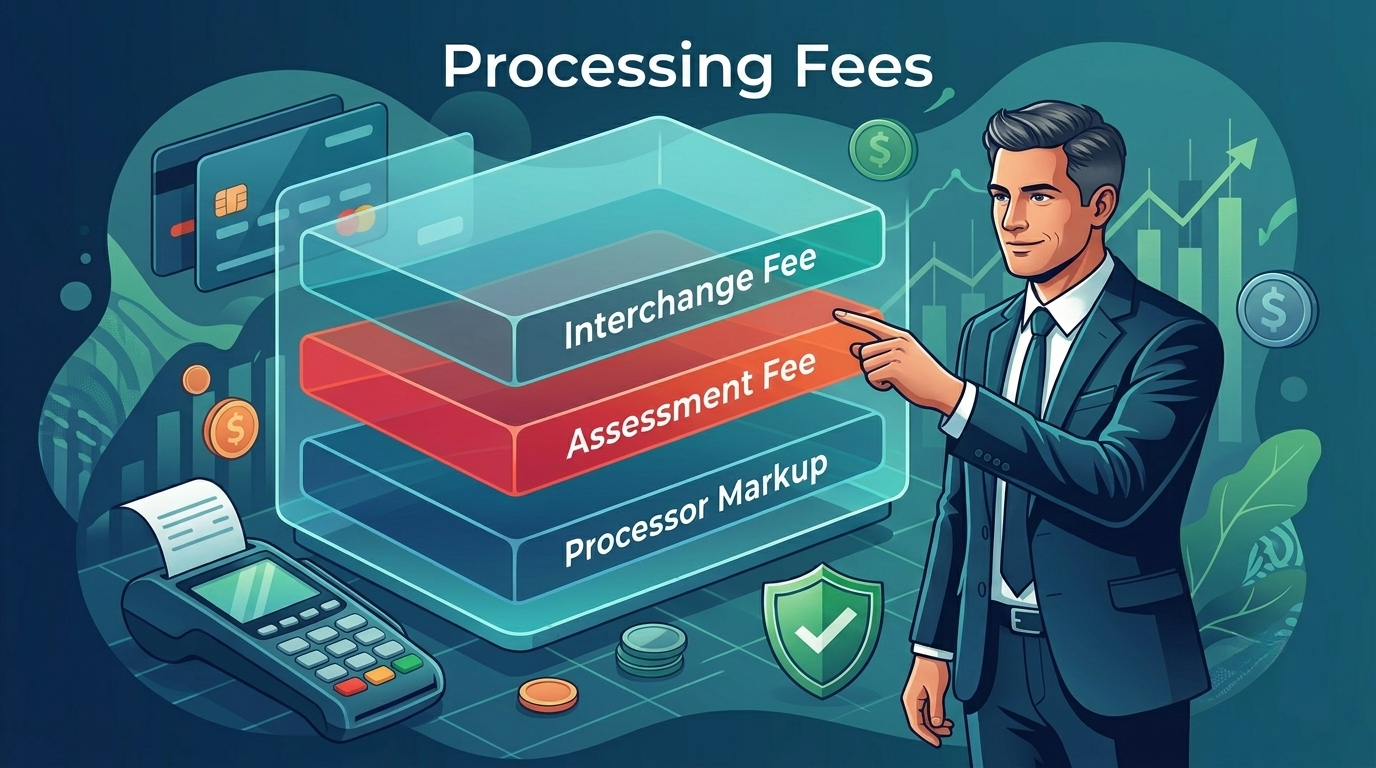
Credit card processing fees are the costs merchants pay every time a customer uses a credit card. Every card transaction passes through several parties: the issuing bank, the card network (Visa, Mastercard, etc.), the acquiring bank, and the payment processor. Each takes a cut, which shows up as three main components on your statement.
First, interchange fees go to the card-issuing bank to cover lending risk and fraud costs. These are set by the card networks and vary by hundreds of categories. Second, assessment fees (also called network fees) go to Visa, Mastercard, or the relevant network to maintain the payment rails. Third, the processor markup is what your payment processor charges on top of interchange and assessment for settlement, reporting, and fraud tools.
Average Credit Card Processing Fees by Network and Channel
Not all cards cost the same to accept. Here is how average credit card processing fees break down by network for in-person versus online transactions in 2026.
For in-person (card-present) transactions, Visa averages roughly 1.79% plus $0.08, Mastercard runs about 1.93% plus $0.08, Discover lands near 2.04% plus $0.08, and American Express comes in highest at approximately 2.61% plus $0.08.
For online or keyed (card-not-present) transactions, the rates jump: Visa to about 2.25% plus $0.25, Mastercard to 2.32% plus $0.25, Discover to 2.22% plus $0.25, and Amex to 3.01% plus $0.25.
How Industry and Transaction Size Affect Your Rate?
Your industry changes the equation. Standard retail in-person businesses pay roughly 1.8% to 2.5%. E-commerce merchants pay 2.9% to 3.8%. SaaS and subscription businesses often land at 3.0% to 4.0% because of recurring billing complexity. High-risk categories (gambling, adult content, CBD, some travel and crypto) pay 4% to 7% or more once chargeback and underwriting risk premiums are factored in.
Transaction size matters too, and this is where credit card processing fees small business owners feel the pinch most. Because most pricing models include a fixed per-transaction fee (usually $0.25 to $0.30), the effective percentage rate gets worse on smaller orders. One benchmark dataset showed a $20 average order value producing an effective rate of roughly 4.4%, while a $250 average order value came out at around 3.0%. If your average ticket is low, that fixed fee is quietly inflating your costs.
The Hidden Costs That Widen the Gap
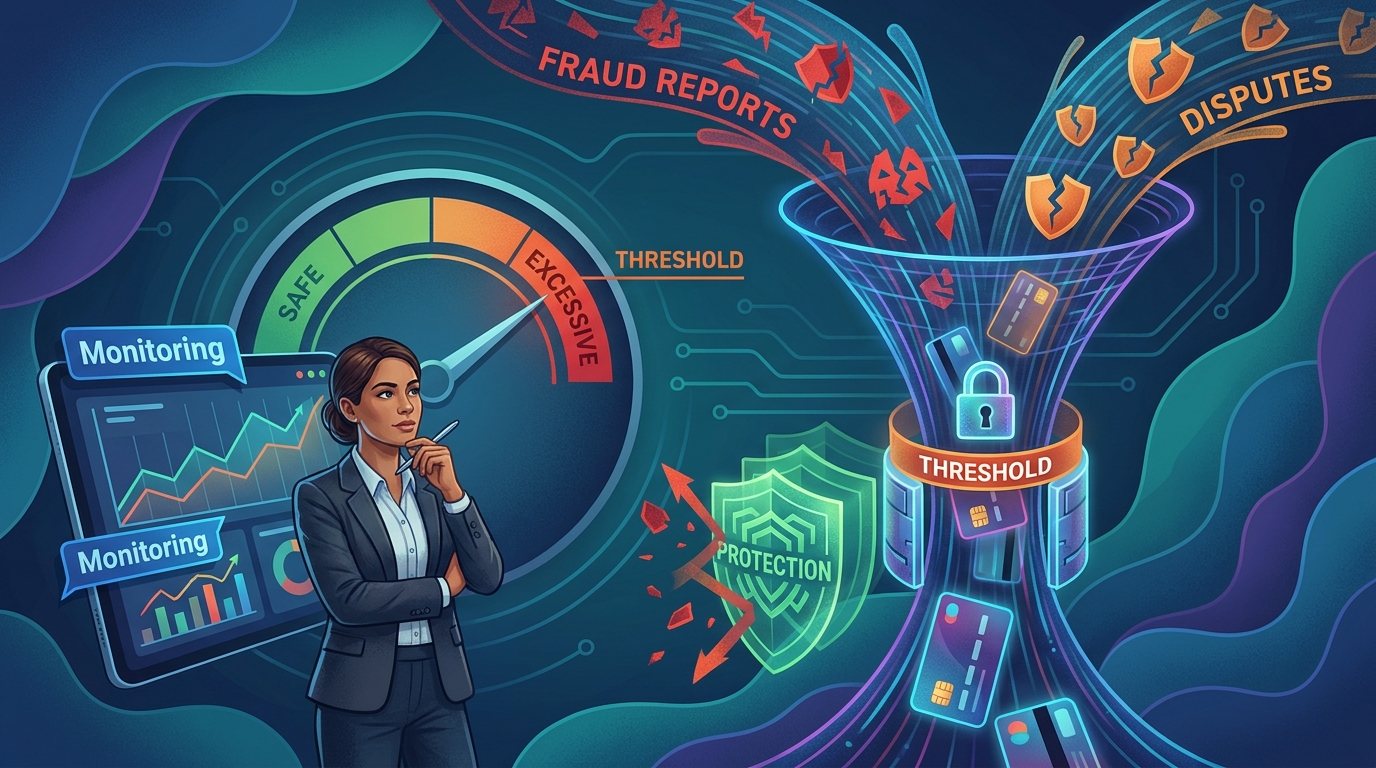
The reason your effective rate never matches the advertised rate comes down to hidden costs that most processors do not highlight upfront. Chargebacks add roughly 0.2% to 0.8% to your effective rate through dispute fees, lost merchandise, and operational time. Monthly account and gateway fees add another 0.1% to 0.4% and 0.1% to 0.3% respectively. Cross-border fees pile on 0.5% to 1.2%.
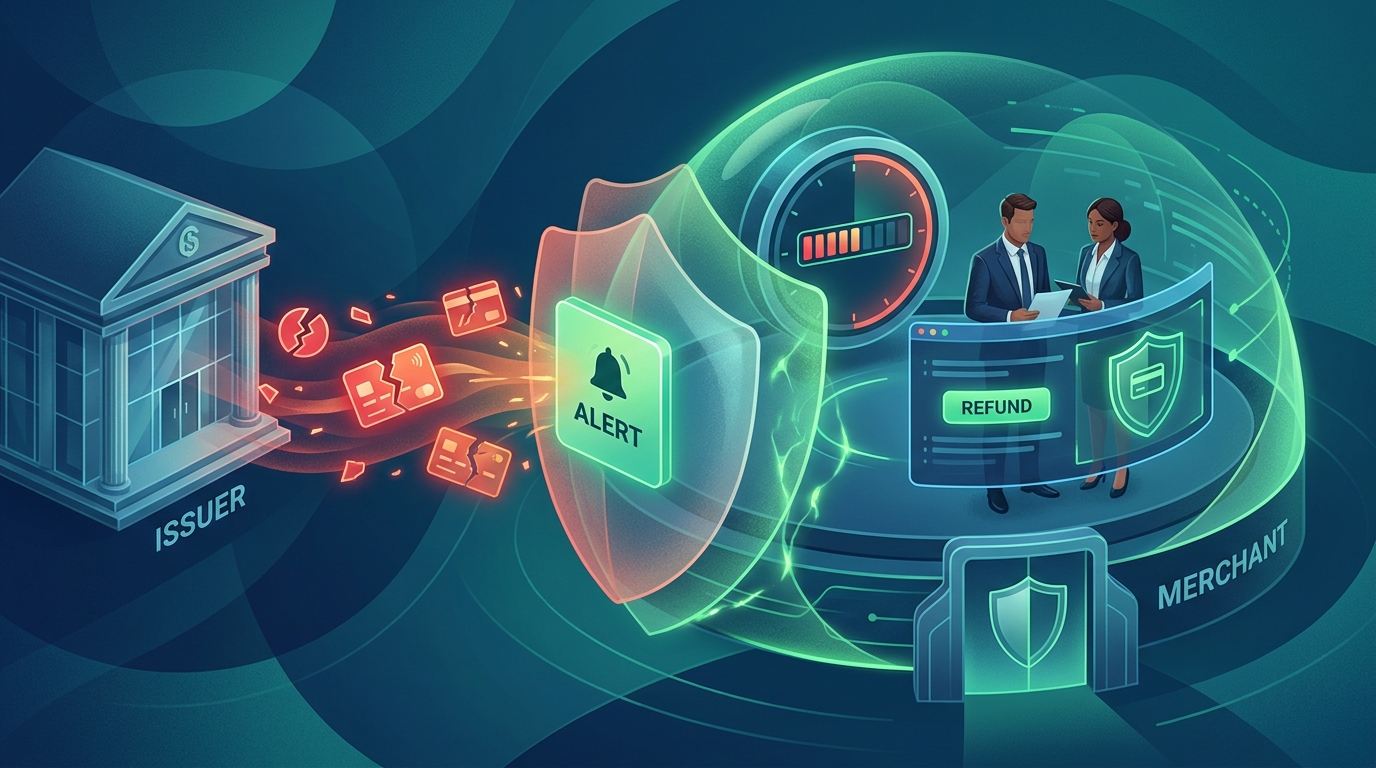
Cumulatively, these hidden costs add roughly 0.9 to 2.7 percentage points beyond the headline rate. That is the main reason "advertised 2.9%" so often turns into "actual 3.5% to 4%" on a merchant's statement. Tools like Kumaa Guard can help reduce the chargeback component by catching disputes before they escalate, which directly lowers your effective processing cost.
Conclusion
Credit card processing fees are one of the largest controllable costs for any merchant. The gap between what you are quoted and what you actually pay is often wider than expected, driven by interchange complexity, hidden charges, and pricing model mismatches. Start by calculating your true effective rate (total fees divided by total volume), then compare it against the benchmarks above. Understanding the breakdown gives you the leverage to negotiate better terms, choose the right processor, and keep more of every sale.