TL;DR / Key Takeaways
- Global e-commerce fraud losses hit $48 billion in 2023 and are projected to exceed $343 billion cumulatively between 2023 and 2027.
- Refund and policy abuse became the most common fraud attack in 2024, affecting nearly half of merchants worldwide.
- Effective payment fraud prevention combines multiple layers: AI scoring, behavioral analysis, device fingerprinting, and strong authentication.
- 87% of financial institutions now deploy AI and machine learning for fraud detection, with systems evaluating 300+ transaction attributes in real time.
- Prevention should balance security with customer experience. Overly aggressive rules create false positives that drive away legitimate buyers.
You just processed a large order from a new customer. Everything looks normal: the card went through, the address checks out, shipping is standard. Two weeks later, a chargeback lands in your inbox. The cardholder says they never made the purchase. Sound familiar?
Payment fraud prevention is no longer a "nice to have" for online merchants. It's a core part of running a business that accepts digital payments. The scale of the problem is growing fast, the tactics are getting more sophisticated, and the cost of doing nothing compounds every quarter.
This guide breaks down what payment fraud prevention actually looks like in practice: the types of fraud you're up against, how modern detection works, and the concrete steps you can take to protect your revenue without turning your checkout into an obstacle course.
What Is Payment Fraud and Why Is It Getting Worse?
Payment fraud is any transaction where stolen, fabricated, or manipulated payment credentials are used to make unauthorized purchases. It includes everything from stolen credit card numbers to synthetic identities built from a mix of real and fake personal data.
The numbers tell the story. Industry data shows that global e-commerce fraud losses reached $41 billion in 2022 and climbed to $48 billion in 2023. Cumulative losses between 2023 and 2027 are projected to exceed $343 billion. That's not a typo.
What's driving the increase? A few things. The shift to online commerce means more card-not-present transactions, which are inherently harder to verify than in-person swipes. Fraudsters have also gotten better at scaling their operations. Automated bots can test thousands of stolen card numbers in minutes. And the rise of real-time payments (now accepted by 43% of merchants, per industry data) means fraud can happen faster than ever, with less time for traditional review processes to catch it.
The threat landscape is shifting, too. In 2024, refund and policy abuse overtook traditional payment fraud as the most common type of attack, affecting nearly half of merchants globally. Fraudsters aren't just stealing cards anymore. They're exploiting return policies, filing false chargebacks, and gaming loyalty programs.
How Does Payment Fraud Prevention Work?
Payment fraud prevention is a set of tools, processes, and strategies designed to identify and block fraudulent transactions before they cause financial damage. Modern fraud prevention doesn't rely on a single tool. It layers multiple detection methods to catch different types of attacks.
Here's how the key components fit together:
Behavioral analysis monitors how users interact with your site. Unusual navigation patterns, rapid clicks, or abnormal cart additions can signal that something's off. Machine learning models build a baseline of "normal" behavior for your customers and flag deviations in real time.
Device fingerprinting tracks unique characteristics of each visitor's device: browser type, operating system, screen resolution, installed plugins. When the same device shows up across multiple failed payment attempts or suspicious accounts, it's a red flag.
Velocity checks catch patterns like multiple orders from the same card or IP address in a short window. This is particularly effective against bot-driven card testing, where fraudsters run rapid-fire transactions to find which stolen numbers still work.
Address Verification Service (AVS) compares the billing address a customer provides with what the card issuer has on file. A mismatch doesn't always mean fraud, but it's a useful signal when combined with other indicators.
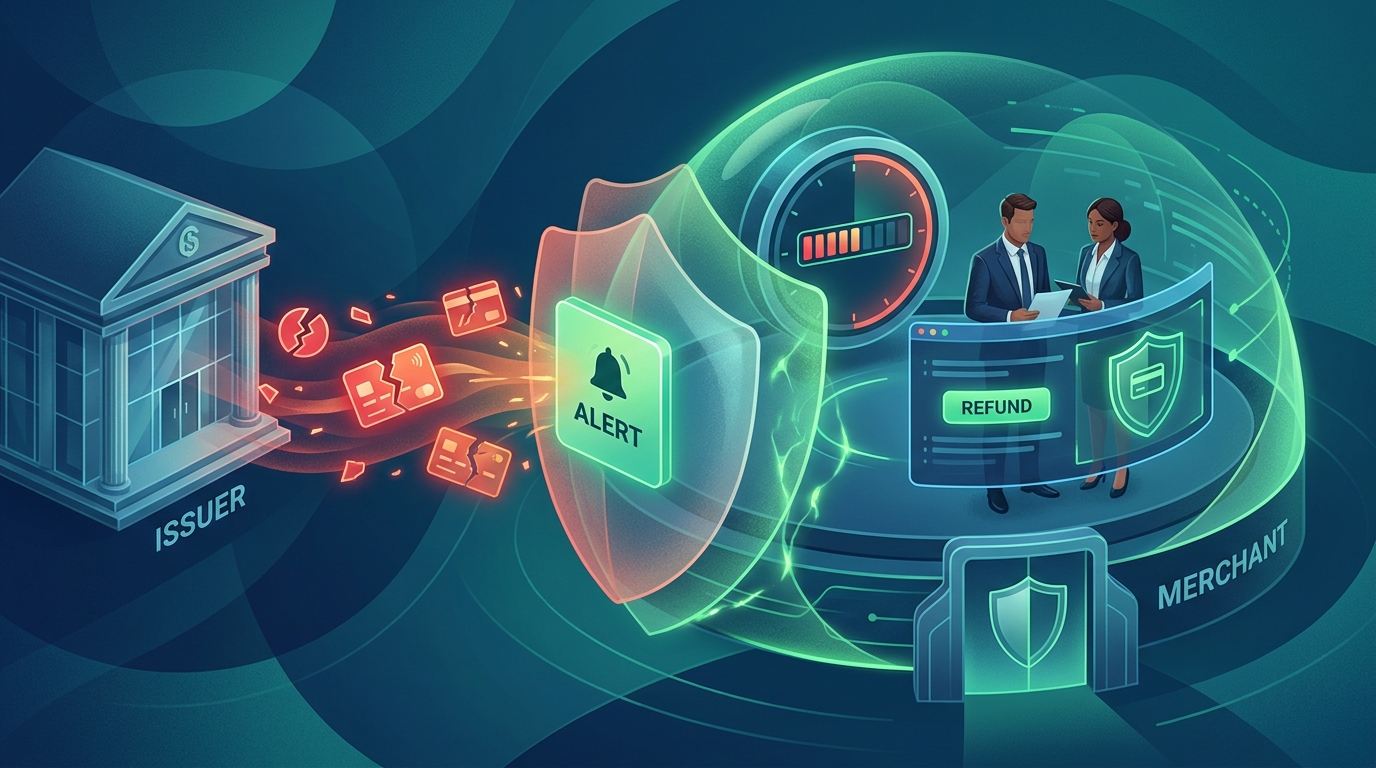
3D Secure (3DS2) authentication adds a verification step during checkout, like a one-time password or biometric confirmation. It shifts chargeback liability to the card issuer and significantly reduces unauthorized transaction rates.
AI-powered risk scoring ties everything together. Modern systems evaluate 300+ transaction attributes at the point of authorization, assigning a risk score that determines whether a transaction should be approved, declined, or flagged for manual review. Research shows that 87% of financial institutions now deploy AI and machine learning for fraud detection.
What Are the Warning Signs of Fraudulent Transactions?
Knowing what to look for helps you catch fraud before it becomes a chargeback. These are the most common red flags, drawn from patterns that fraud teams see across industries.
Mismatched billing and shipping addresses are one of the oldest indicators. Fraudsters using stolen card details often ship to a different address than the one associated with the card. This alone isn't conclusive, but it should trigger additional scrutiny.
High-velocity transactions, meaning multiple rapid orders from the same account, card, or IP address, often signal card testing or automated fraud. Legitimate customers rarely place five orders in three minutes.
Orders from IP addresses associated with VPNs, proxies, or high-risk regions deserve a closer look. This doesn't mean every VPN user is a fraudster, but the correlation is strong enough to warrant additional verification.
Multiple failed payment attempts followed by a successful one suggest trial-and-error with stolen credentials. A legitimate customer typically enters their card details correctly on the first or second try.
New accounts placing large orders with no purchase history are a classic pattern. Fraudsters create throwaway accounts, make one big purchase with stolen credentials, and disappear.
Suspicious email addresses, particularly those with random character strings or temporary email providers, are another signal. Most real customers use established email accounts tied to their identity.
How to Prevent Payment Fraud: A Layered Strategy
The most effective approach to payment fraud prevention uses multiple layers working together. No single tool catches everything, but the combination creates a defense that's difficult for fraudsters to penetrate.
Start with strong authentication. Implement 3D Secure (3DS2) for card transactions, especially for high-value orders. This adds a verification step that dramatically reduces unauthorized purchases while shifting chargeback liability away from you.
Deploy AI-powered fraud scoring. Real-time risk assessment that evaluates hundreds of transaction attributes is far more effective than static rules. Machine learning models adapt to new fraud patterns automatically, which matters because fraudsters constantly change their tactics.
Use device fingerprinting and behavioral analytics. These tools catch fraud that looks "normal" on the surface. A transaction might have matching addresses and valid card details, but if the device has been linked to previous fraud attempts or the browsing behavior is inconsistent with a real shopper, the system flags it.
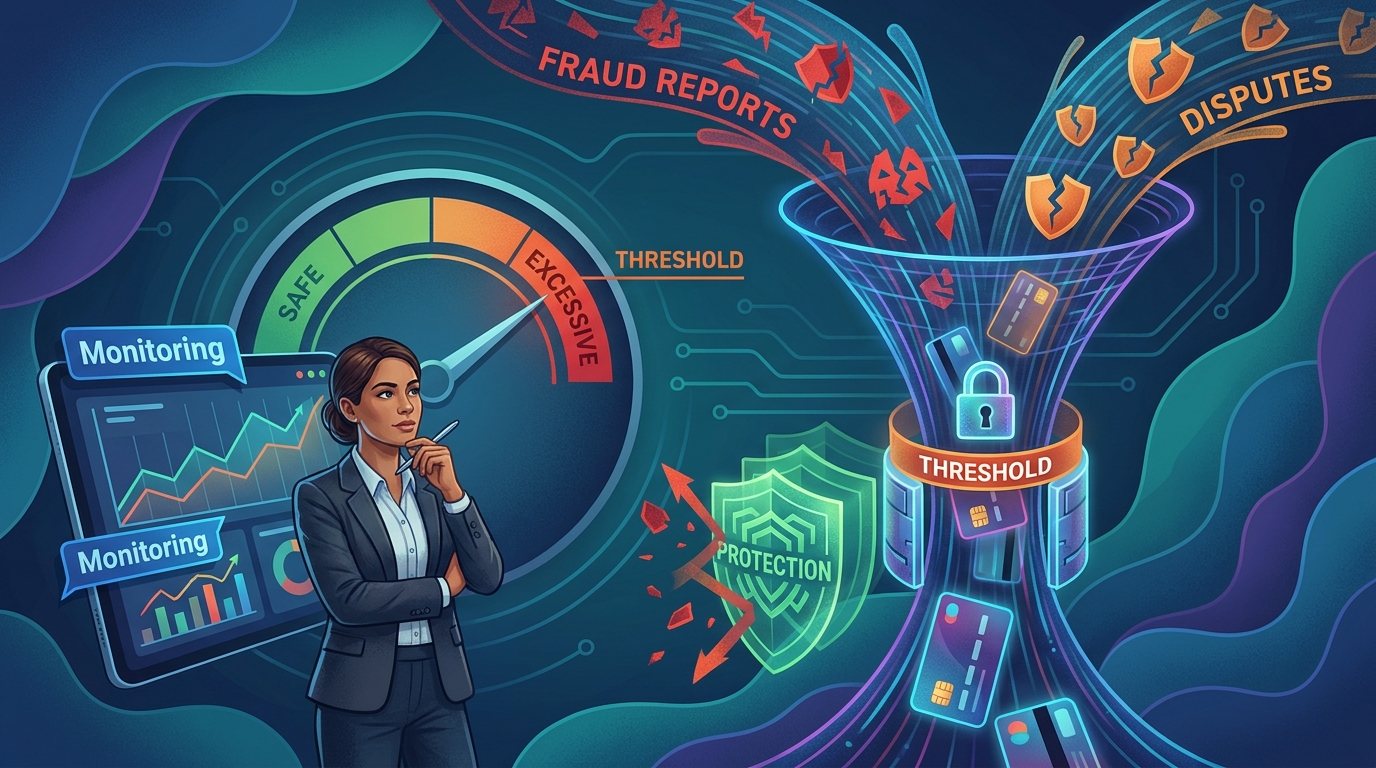
Implement velocity controls. Set thresholds for how many transactions, failed attempts, or new accounts can originate from a single card, IP address, or device within a given timeframe. This is your first line of defense against automated attacks.
Monitor for refund and policy abuse. Since this is now the most common type of fraud, your prevention strategy needs to account for it. Track return patterns, flag serial returners, and tighten policies around high-risk product categories.
Train your team. Technology handles the bulk of detection, but human review still matters for edge cases. Make sure your team knows what to look for and has clear escalation procedures for suspicious orders.
Balance security with experience. This is where many merchants get it wrong. Overly aggressive fraud rules create false positives that decline legitimate customers. Industry surveys show that 63% of merchants are exploring agentic AI solutions that can make more nuanced decisions, reducing false declines while maintaining strong protection.
If you're already working on reducing chargebacks from the dispute side, layering in upstream fraud prevention creates a much stronger position. Prevention catches fraud before it becomes a chargeback, which means fewer disputes, lower fees, and a healthier merchant account overall. Tools like Kumaa Guard can help automate this process by combining chargeback alerts, dispute management, and fraud prevention into a single workflow.
What Role Does AI Play in Modern Fraud Prevention?
AI and machine learning have fundamentally changed how fraud prevention online payment systems work. Traditional rule-based systems relied on static thresholds: decline any order over $500 from a new customer, block all transactions from certain countries. These rules were rigid, easy to game, and generated too many false positives.
Modern AI-powered systems take a different approach. They analyze patterns across millions of transactions to build models that can distinguish legitimate behavior from fraudulent behavior with much higher accuracy.
Real-time scoring is the biggest advantage. AI evaluates each transaction as it happens, pulling in data points like device history, behavioral patterns, geographic signals, transaction velocity, and card verification results. The system assigns a risk score instantly, allowing merchants to approve, decline, or flag transactions without introducing checkout delays.
Adaptive learning is the other major benefit. Fraud patterns change constantly. Last year's card testing techniques might be replaced by new synthetic identity schemes this year. Machine learning models retrain on new data automatically, keeping pace with evolving threats in a way that static rules never could.
Behavioral biometrics represent the next frontier. These systems analyze how a user types, moves their mouse, or holds their phone to create a unique behavioral profile. Even if a fraudster has stolen all the right credentials, their behavior on the site won't match the legitimate account holder's patterns. This layer of detection is becoming increasingly important as traditional verification methods (passwords, security questions) prove insufficient on their own.
Conclusion
Payment fraud prevention isn't a one-time setup. It's an ongoing process that evolves as fraud tactics change. The merchants who succeed are the ones who layer their defenses, leverage AI-powered tools, and continuously refine their approach based on real transaction data. Start with strong authentication and real-time scoring, build in behavioral and device-level detection, and keep your team trained on the latest patterns. The cost of prevention is always lower than the cost of fraud.