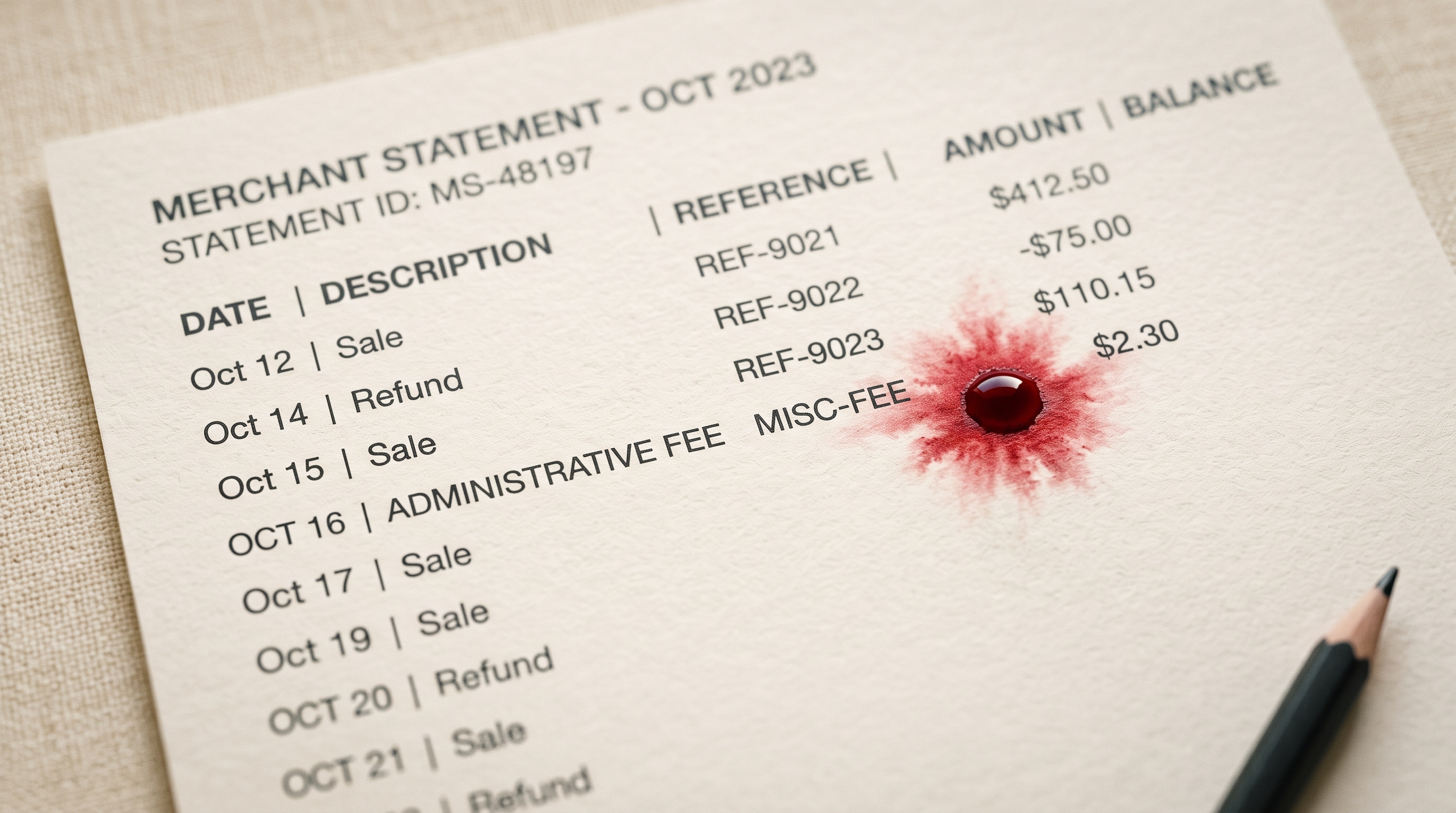
Five minutes today, pull up your last merchant statement.
Somewhere on it is a line for chargeback fees. Every processor charges you when a customer disputes a transaction. What they call the line varies - "dispute fee," "chargeback fee," "retrieval fee," sometimes just a cryptic code you have to look up. What they charge, and whether they give it back if you win, varies more.
Most operators glance at it once when they onboard, then never again. That's the mistake.
Where the major processors sit in 2026
Stripe. Fifteen dollars per chargeback. Refunded if you win. Waived entirely if the dispute is withdrawn or resolved before a formal chargeback is filed. Since June 2025, there is also a separate $15 counter fee when you fight - also refunded if you win.
PayPal. Twenty dollars per chargeback. Not refunded, regardless of outcome. PayPal's own seller documentation is explicit on this: even if you successfully represent the dispute and recover the transaction amount, the fee sticks. Seller Protection can cover the disputed principal on eligible physical-goods orders. It never covers the fee.
Square. Zero dollar chargeback fee - for now. This changes if you exceed volume thresholds, and Square reserves the right to introduce fees on higher-risk accounts.
Adyen. Roughly €15 to €25 per chargeback, depending on region and scheme. Not refunded on wins. Adyen also passes through scheme fees separately, which is worth reading your contract for.
Shopify Payments. Fifteen dollars per chargeback. Refunded if you win. (Same underlying rails as Stripe.)
Braintree. Fifteen dollars per chargeback. PayPal-owned, but the fee policy has historically tracked closer to the card-processor norm than to PayPal's.
The number nobody runs
Now find your line, count the entries on your last three statements, and multiply by the fee for your processor. That is what chargebacks have cost you in fees alone - before you count a single dollar of the disputed amounts themselves.
Then compare it to what the same disputes would have cost on a different processor.
A merchant with ten disputes on PayPal, winning six of them, still pays $200 in fees. The same ten disputes on Stripe, with the same six wins, cost $60. Same customer behavior. Same win rate. A 3.3x difference in fee drag, purely because of where the account lives.
Now scale that. A merchant doing $2M/month in card volume with a 0.6% dispute rate - well under the Visa monitoring threshold - is looking at roughly 120 disputes a year. On PayPal, that's $2,400 in fees, none of it recoverable. On Stripe with a 60% win rate, it's $720. That gap alone can be the difference between whether your fraud tooling pays for itself.
Why dashboards hide this
Most merchant dashboards report chargeback rate as the headline number. It's the metric the card networks care about, so it's the metric you see first. Fees are buried - typically two or three clicks in, on the statement or a fees export, and usually netted against other charges rather than broken out.
That's not accidental. Rate is the number that gets you shut down. Fees are the number that quietly eats your margin. The first triggers a compliance conversation with your processor. The second doesn't trigger anything, so nobody talks about it.
The result: operators can quote their dispute rate to two decimal places but have no idea what their chargeback fee line comes to in a year. In most cases, when they finally run the number, it's larger than they thought - often by a factor of two or three.
What to do with the number
Once you have it, three things follow.
First, it changes how you think about fighting disputes. On a processor that refunds fees on wins (Stripe, Shopify Payments), every win is a full recovery. On one that doesn't (PayPal, Adyen), a win still costs you the fee - which means the break-even on time spent building a representment case is different, and the ROI of investing in evidence tooling looks different.
Second, it changes how you evaluate processors. Rate cards get a lot of attention during onboarding. Dispute fee policy rarely does. It should - for most SMB merchants, dispute fees are a bigger annual cost line than the marginal difference in interchange between two competitive processors.
Third, and this is the one most operators skip: it changes how you think about preventing disputes in the first place. If your fee line is $2,400 a year, a tool that prevents 30% of disputes pays for itself at any price under $60/month. If your fee line is $12,000, the math opens up considerably.
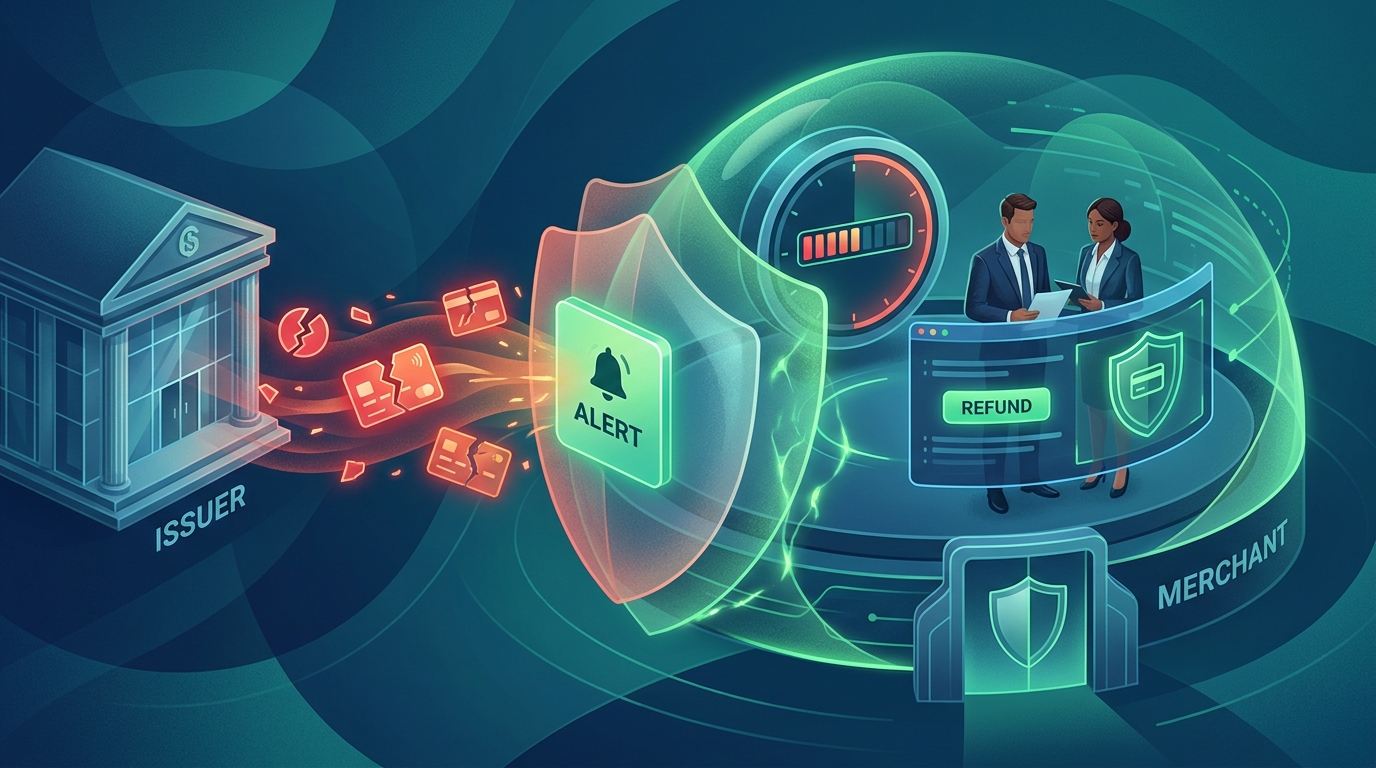
That's the part of the calculation KumaGuard is built around. It's a prevention layer that sits in front of the dispute, not a representment tool that fights after one lands. The economics only make sense if you know what your current fee line actually is. See how KumaGuard works →
The five-minute homework
Pull the statement. Find the line. Count the entries. Multiply. Compare against what the same activity would have cost on the two other processors you almost signed with.
If you want the math done for you, run it through the chargeback cost calculator - plug in your monthly volume, dispute rate, and processor, and it'll produce the annual fee line and a side-by-side.
It is the first thing to check when reading a statement. In most cases, the number is larger than the operator running the business thought it was.
A note on the numbers. Fee amounts cited above are drawn from each processor's published documentation and reputable third-party sources as of 2026. Processor fees change over time - sometimes without much notice - and can vary by region, currency, account tier, and negotiated contract. Treat these figures as directional. Before making a decision based on them, verify the current numbers against your own processor agreement or the processor's official pricing page.
- Ludo, CEO, Kumaa Payments