TL;DR / Key Takeaways
- Agentic commerce is online shopping where an AI agent handles discovery, comparison, and payment for a shopper, with no human clicking at checkout.
- 63% of merchants say they are exploring or planning agentic AI payments, so this is moving from pilot to production quickly.
- The fraud risks are familiar problems in a new channel: account takeover, stolen cards stored with an agent, spoofed agents, and prompt injection.
- Dispute liability is the open question. When a bot buys the wrong thing, cardholders still file chargebacks and merchants still absorb them.
- The prep work is unglamorous and effective: capture agent-level audit trails, tighten authentication, and fix your dispute process before volume arrives.
What Is Agentic Commerce?
Agentic commerce is a model of online shopping in which an AI agent completes discovery, comparison, and payment on a consumer's behalf. Instead of visiting five sites and clicking buy, a shopper tells an assistant "order me running shoes under $120," and the agent does the rest.
If you sell online, this matters sooner than you might expect. A 2026 global survey of more than 1,270 merchant professionals across 37 countries found that 63% of merchants are actively exploring or planning to implement agentic AI payments. Visa and Mastercard have each published protocols for agent-initiated transactions, and separate industry consortiums are pushing competing standards.
That is a lot of infrastructure arriving at once. The upside is real, and so is the risk. Most merchants have not updated their fraud rules or dispute playbook for a customer who never touches the checkout page.
How Agentic Commerce Differs From Traditional Ecommerce?
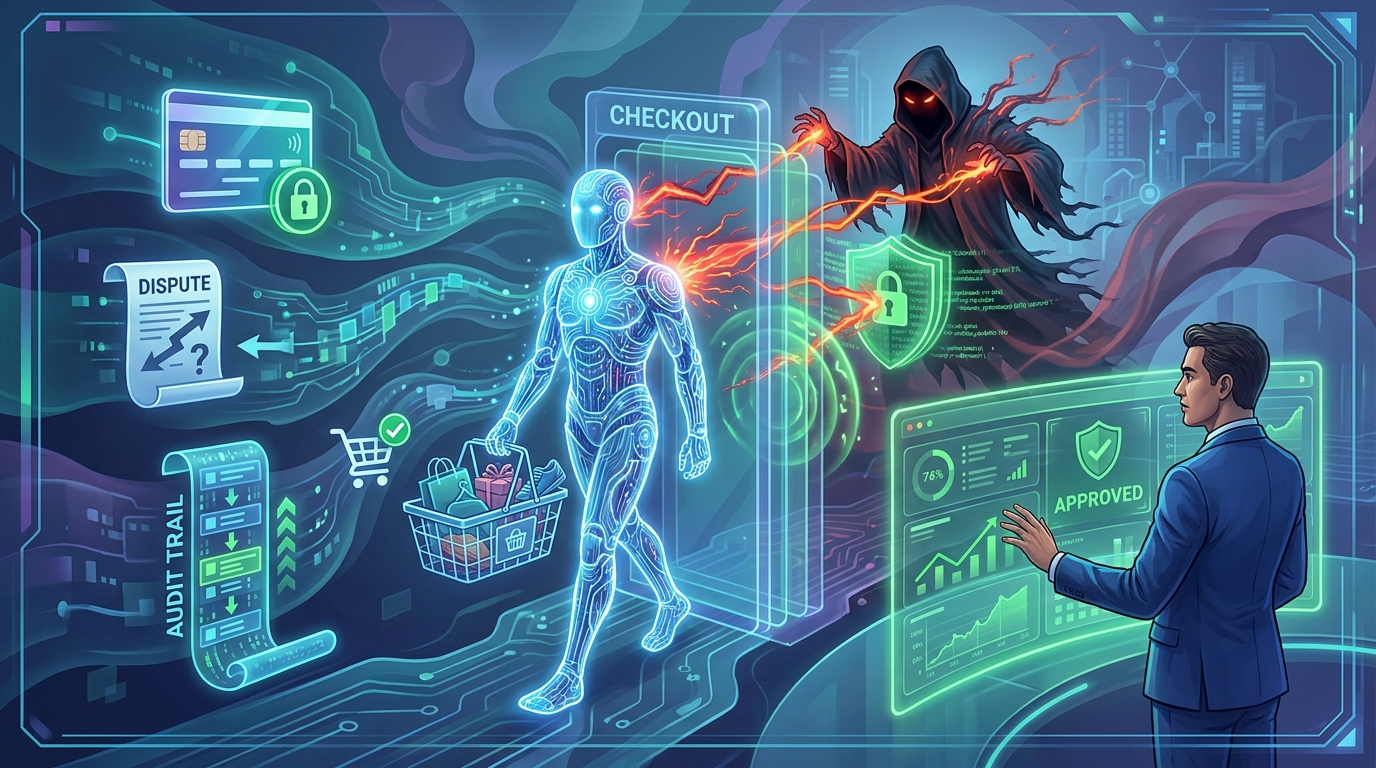
The core difference is who is present at the moment of purchase. In traditional ecommerce, a human sees your product page, shipping terms, and return policy before paying. In agentic commerce, an AI agent sees that information and the human sees a summary afterward.
That single change breaks assumptions your fraud stack relies on. Device fingerprints, mouse movement, and time-on-page all weaken as signals when the visitor is software. A shopper who buys in three seconds from a data center IP looks like a bot because it is one, and it may be legitimate.
It also changes the evidence trail. Your best defense in a dispute has always been proof that a specific person did a specific thing. When an agent acts in the middle, you need proof of who authorized it and what instructions it received.
What Are the Fraud Risks in Agentic Commerce?
Agentic commerce fraud is mostly existing attack types routed through a new channel. Four risks stand out.
Account takeover gets more valuable. A compromised shopping agent may hold stored credentials, a saved address, and standing purchase permissions, so one phishing success can produce a run of unauthorized orders rather than a single fraudulent checkout.
Stolen cards find a new home. A fraudster can load a stolen card into an agent and let automation place rapid orders across many merchants, which is card-not-present fraud with better tooling.
Spoofed agents impersonate real ones. A malicious agent can mimic the traffic patterns and headers of a legitimate one to pass allowlists.
Prompt injection alters behavior. Hidden instructions planted in a page or listing can push an agent toward a purchase the shopper never asked for.
Who Owns the Chargeback When an AI Agent Buys?
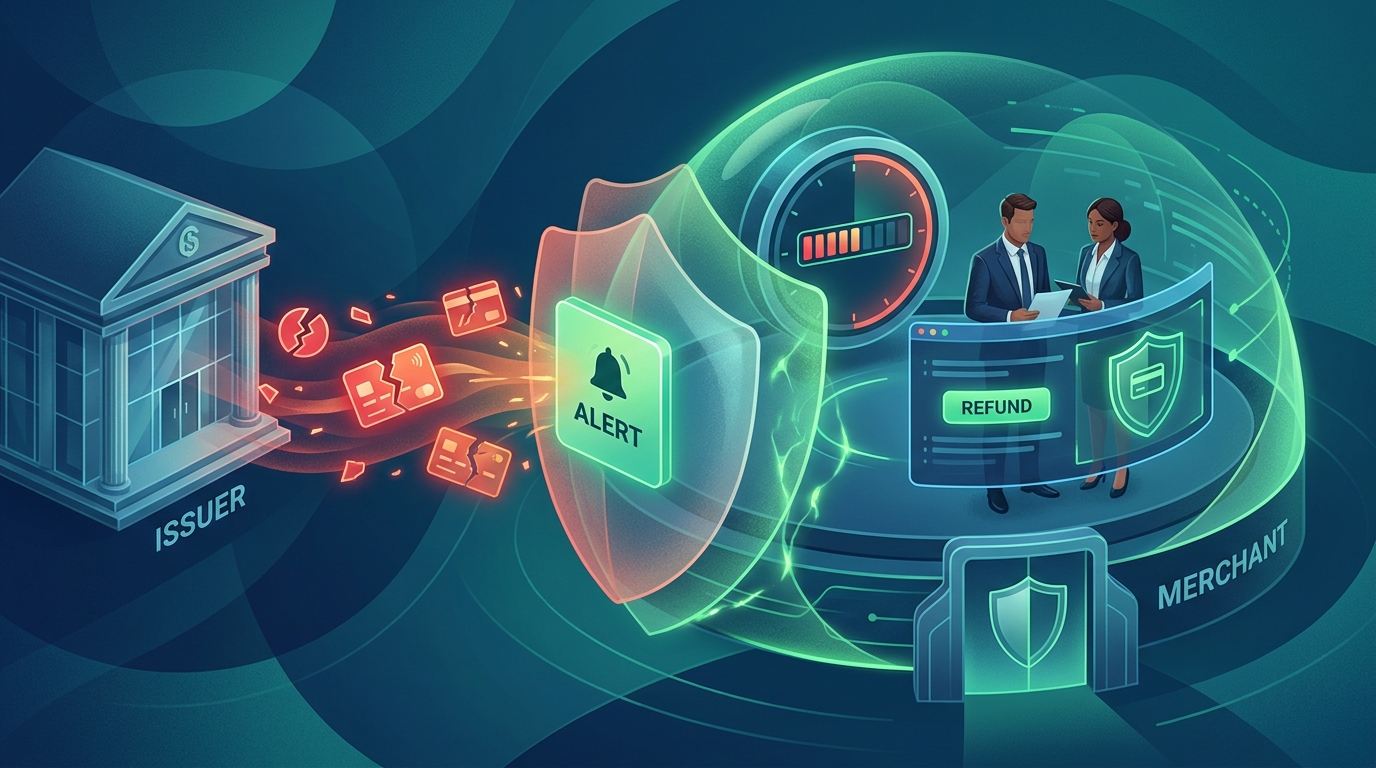
Nobody has a clean answer yet, and that uncertainty lands on merchants first. Card network rules were written for cardholders, not software acting under delegated authority, so a disputed agent purchase still arrives as an ordinary chargeback.
Expect first-party misuse to grow here. It is already climbing: 64% of merchants report rising rates, with one quarter reporting increases of 25% or more. Add an excuse like "the AI ordered it, not me" and the temptation gets stronger. This is friendly fraud with a better alibi, and it will reach your dispute queue before the rules catch up.
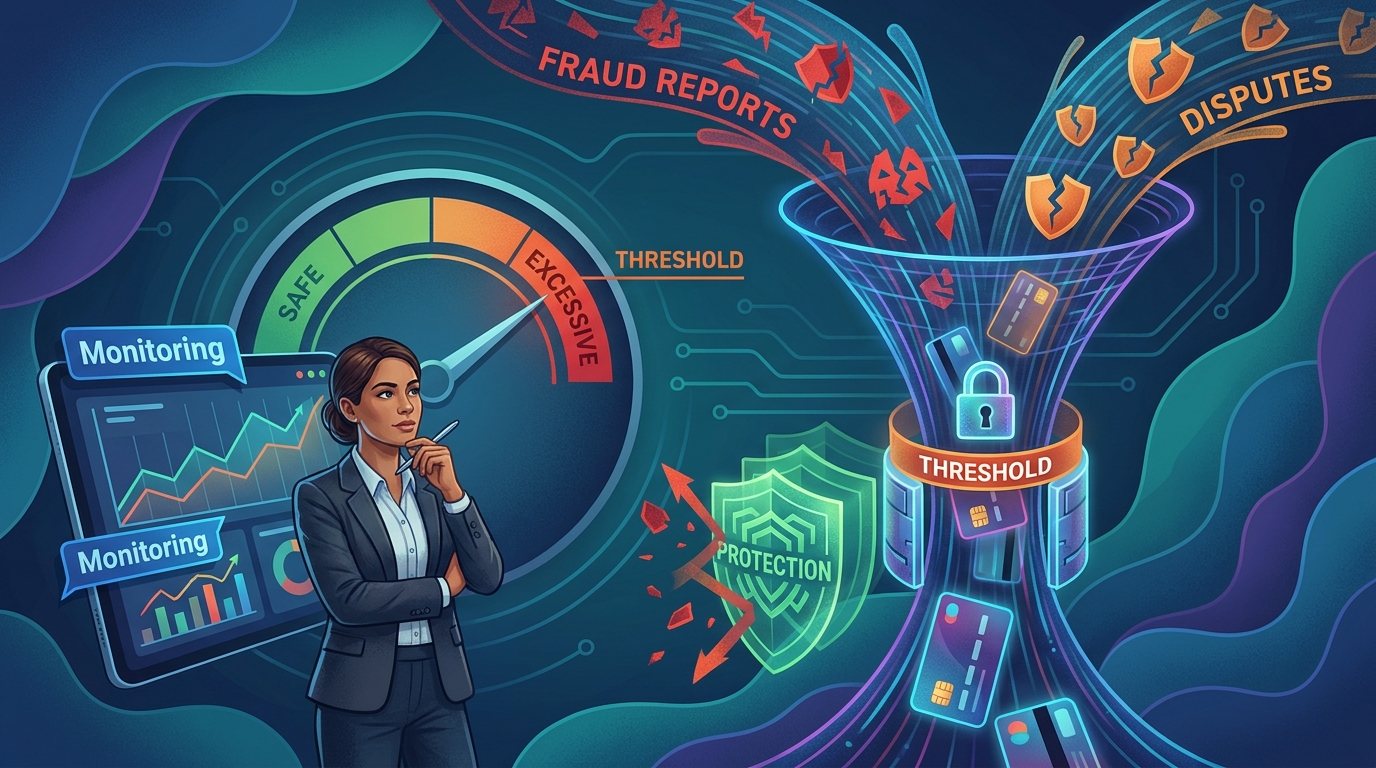
The timing is awkward for another reason. Visa lowered its VAMP ratio threshold from 2.2% to 1.5% in April 2026, so you have less room for dispute volume than you did a year ago. Tools like Kumaa Guard automate dispute responses and surface the transaction evidence you need to fight representment cases quickly.
How Merchants Can Prepare for Agentic Commerce?
You do not need an agentic commerce strategy this quarter. You do need three things in place.
Start logging agent context. Capture whether a transaction was agent-initiated, which agent it was, and what authorization it presented. If you cannot answer those questions in six months, you will lose disputes you should win.
Rebuild the signals you trust. Shift weight from behavioral cues toward tokenization, delegated payment credentials, and verified agent identity. Roughly 72% of merchants already use some form of payment tokenization, which is the right foundation.
Watch agentic commerce compliance as it develops. Network rules, regional AI regulation, and authentication standards are all in motion, so assign someone to track them.
Conclusion
So what is agentic commerce in practical terms? It is a new front door to your store where the shopper is represented by software, bringing familiar fraud and dispute problems in an unfamiliar shape. Merchants who capture agent-level evidence and tighten their dispute process now will be the ones who can accept this traffic profitably later.